|
|
|
|
|
|
|

|
| MTM Newsletter |
N° 41 - September 2025 | |
|
|
|
| |
|
|
|
|
|
| |
|
|
|
Laboratory News
|
 PFAS - The Forever Chemicals - and what we can do about it PFAS - The Forever Chemicals - and what we can do about it
|
PFAS, the per- and polyfluoroalkyl substances, are chemically and thermally very stable. They are toxic and harmful to health. According to the German Federal Environment Agency, this group of substances includes over 4,700 different chemicals that accumulate in the environment and in humans. These substances were found in 86 percent of a total of 1,109 examined blood plasma samples. Studies showed that in 100 percent of all investigated children exposure was noted.
Researchers at the University of Notre Dame recently discovered these Forever Chemicals in reusable hygiene products for women. Prof. Graham Peaslee, Emeritus Professor at the Department of Physics and Astronomy, noted that PFAS can also be found in sustainably produced textiles. He stated, however that it is still unclear whether and how the PFAS found in textiles can enter the body.
More on this:
https://news.nd.edu/news/researchers-at-notre-dame-detect-forever-chemicals-in-reusable-feminine-hygiene-products
PFAS can be detected in serum or plasma. Approximately 3ml of the respective blood sample is required.
A recently published study from Cambridge University points out how to 'dispose of' PFAS. According to the researchers, gut microbes protect against PFAS and are capable of excreting these substances from the body. Supporting the gut flora is therefore an important measure to get rid of 'forever chemicals'.
More on this:
https://www.cam.ac.uk/research/news/gut-microbes-could-protect-us-from-toxic-forever-chemicals
|
|
Metal Analysis in Blood of Dogs and other Animals
|
In addition to fur analysis, we determine essential trace elements, minerals, and toxic metals not only in human blood but also in the whole blood of dogs, cats, cows, and horses. We also test metals in the serum of dogs and cows.
For more information, read:
https://www.microtraceminerals.com/animal-mineral-analysis/blood-mineral-analysis/bloodmetals
|
|
Information on assessing urine test values after chelation therapy
|
The German toxicologist and environmental physician Dr. Max Daunderer, also known as the 'poison pope', was the first to express the opinion that the assessment of a provocation urine test values should be compared to chelation-specific reference values. He thus developed the so-called DMPS reference value. These were based on a 95th percentile and were obtained after IV administration of 250mg DMPS. Daunderers DMPS ranges largely match today’s calculation.
Note: Variations in the administration of a substance affect metal binding and excretion. Additional factors include
- Application and dosage
- Different fluid intake during application and collection time
- Variations in urine collection time
It is supposed that the half-life of a chelating substance represents an ideal urine collection time. Although chelating substances can bind metals up to 24 hours, the binding capacity of a chelating substance is most active during its half-life. For parenterally administered DMPS or EDTA, the half-life is 45min. The collection time would be 45 minutes plus the application time. If EDTA or DMPS is infused over 15 minutes, the urine collection time would be one hour.
To evaluate the success of a combination therapy, test values of the provocation urine would need to be compared to urine test values of the ‘before’ or unprovoked urine. This comparison allows us to assess if metal binding and excretion was successful during chelation.
|
Silver (Ag) in drinking water
|
Silver is of low toxicity. However, argyria (a discoloration of the skin due to silver deposits) is an unwanted health effect caused by excessive exposure to silver ions, resulting in silver deposits in skin. Silver-based water purification systems are a potential source of exposure and may be responsible for elevated silver levels in blood, urine, or hair.
The US Environmental Protection Agency (EPA) lists a maximum contaminant level (MCL) and a safe permissible value of 0.5 µg/L in drinking and mineral water. The World Health Organization (WHO) guideline for drinking water quality does not provide a guideline value for silver (Ag) in drinking water, but specifies that a concentration of 0.1 mg/L can be tolerated without health risks.
Fewtrell L, Majuru B, Hunter PR. A re-assessment of the safety of silver in household water treatment: rapid systematic review of mammalian in vivo genotoxicity studies. Environ Health. 2017 Jun 20;16(1):66; Umweltbundesamt. Silber 10.04.2019
|
|
Health Effects of Lanthanum (La)
|
Lanthanum is one of the rare earth metals that is hardly found in nature. It enters the environment through many processes, primarily through gasoline-producing industries, leading to enrichments in soil and water, as well as accumulation in humans and animals. The industrial use of lanthanum is on the rise and since this rare earth metal is increasingly used in household appliances, such as colour televisions, fluorescent lamps, energy-saving lamps, and glass, careless disposal of household appliances is another source of lanthanum in the environment.
Lanthanum vapours primarily endanger workers who handle them. Prolonged exposure can lead to pulmonary, even lung cancer. Bioaccumulation in the human body poses a threat to the liver. In animals, lanthanum causes damage to cell membranes, which negatively affects reproduction and the nervous system. Shellfish can be a source of lanthanum.
We assume that the increasing use of lanthanum will lead to an increase in more visible laboratory test values.
|
|
Frequently asked questions (FAQ)
|
Low Iron-Concentration in Hair
Hair is an easy to access body tissue. A low iron content in hair indicates low tissue storage. During times of great stress and low intake of dietary iron (as in vegetarians), the body might have to tap into stored iron. If the iron level in hair is low, storage in other tissues is also expected to be low.
Important: A low iron concentration in hair does not reflect an acute iron deficiency anaemia. Before starting iron therapy, the availability of iron should be confirmed by determining the blood count, ferritin, and transferrin saturation (TFS).
Calcium in Hair
The laboratory diagnosis of a calcium deficiency is difficult, mainly because hormones maintain serum calcium levels for a long time. Studies suggest that whole blood calcium is more likely to potentially detect a deficiency, because whole blood reflects intra- and extracellular levels. Low calcium levels in hair indicate low tissue storage and serve as a diagnostic tool to early locate a cause of deficiency symptoms.
High calcium levels in natural hair generally reflect metabolic problems. In menopausal or older individuals, high calcium levels in hair usually indicate increased calcium turnover or a release from muscles and bones. A bone density test can confirm this. (Note: chemical hair treatments can falsely elevate calcium levels.)
For more information, check our website
www.microtraceminerals.com or contact us at service@microtraceminerals.com
|
|
Our promotion! Send in a hair or fur sample and receive a free book!
|
Send us a hair or fur sample for an extended mineral analysis (P10) and you will receive our book along with the results:
MINERALS AND TRACE ELEMENTS IN HAIR AND TISSUE ANALYSIS (Book in German!).
|
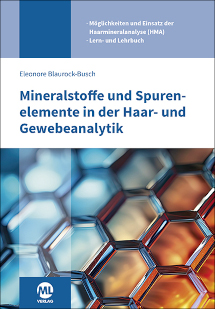
https://www.microtraceminerals.com/books-by-eblaurock-busch/textbook-nutrient-therapy
|
Free of charge.
The book is valued at € 49.95.
Here's how it works:
Please make note #HMAFreeBook
on the submission form.
This promotion is valid until December 31, 2025, and only while supplies last.
We also reserve the right to deliver only one book per practice. |
|
| |
| |
|
|
| |
|
|
|
Medical Workshops and Conferences
|
 International Conferences & Workshops 2025 International Conferences & Workshops 2025
|
|
At the moment we do not have any seminars planned or scheduled.
|
|
|
If you are interested in workshops on environmental issues, chelation, laboratory testing or metal toxicology, check our website:
https://www.microtraceminerals.com/en/workshops-and-seminars
|
Webinars
|
Online conference of the DGUHT
Time:
Saturday, September 20, 2025
3:00 PM (UTC/GMT)
(please check and convert to your time)
The German Association of Environmental and Human Toxicology (DGUHT) will hold an online conference. There will be lectures on PFAS and other environmental topics. However, lectures are in German.
Information and registration at DGUHT e.V.: info@dguht.de.
|
| |
| |
|
|
|
|
|
|
|

|
|
Autumn has arrived!
We wish you a cozy autumn season filled with warmth, peace, and little moments of joy. May the beauty of nature inspire you and bring you new energy.
Best wishes from
E. Blaurock-Busch, Yvette Busch, and the entire team at
Micro Trace Minerals Laboratory.
|
|
|
|
|
|
| |
|
|
| |
|
|
|